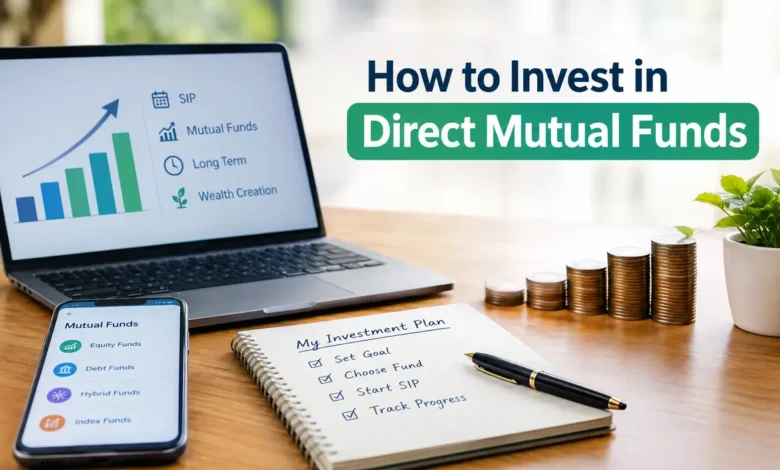
How to Invest in Direct Mutual Funds
Many people want to grow their money without paying extra distribution costs. Mutual funds can offer a simple way to invest across many assets through one fund. Direct plans can also help investors reduce the cost linked to distributor commissions.
| Feature | Direct Mutual Fund | Regular Mutual Fund |
| Distributor | No | Yes |
| Expense ratio | Usually lower | Usually higher |
| Portfolio | Same scheme portfolio | Same scheme portfolio |
| Fund manager | Same | Same |
| Investor choice | Self-managed | Often guided by distributor |
| Best for | DIY investors | Investors seeking help |
Direct and regular plans belong to the same mutual fund scheme. The main difference is the way the investor buys the plan and the expenses charged to the plan. AMFI states that direct plans have lower expense ratios because distributor commissions are not included.
Before investing, you should know your goal, time period, and risk level. You should also check the fund type, costs, past record, and risk factors. A direct plan does not remove market risk, so careful fund selection still matters.
A direct plan can suit a person who wants to make fund choices alone. It may not suit someone who is new to mutual funds or feels unsure about choosing a fund. AMFI also notes that investors who need guidance may consider professional advice or a regular plan.
1. How to Invest in Direct Mutual Funds by Knowing the Basics
Direct mutual funds are plans bought without using a mutual fund distributor. You deal with the mutual fund company or an eligible direct-plan platform. The fund itself is managed by the same fund manager as its regular plan counterpart.
The portfolio is generally common between direct and regular plans of the same scheme. The main cost difference comes from distribution expenses and commissions. Since direct plans do not pay distributor commission, their expense ratio is generally lower.
This lower cost can help over a long period. Even a small cost difference can matter when your investment grows through compounding. However, a lower expense ratio does not mean a fund will always give better market returns.
2. How to Invest in Direct Mutual Funds by Setting a Goal
Start with a clear money goal before selecting a fund. Your goal may be retirement, a home, education, travel, or long-term wealth creation. The goal helps you decide how much risk you can take.
Your time period is also important. Money needed soon should not normally be placed in a highly risky fund without careful thought. Long-term goals may allow more time for market ups and downs to settle.
Think about how much you can invest each month. A fixed monthly amount can make investing easier to manage. A simple plan can also reduce the pressure of trying to guess the best time to enter the market.
3. How to Invest in Direct Mutual Funds by Checking Risk
Every mutual fund carries some level of risk. Equity funds can move sharply because their value is linked to the stock market. Debt funds have different risks, such as interest rate and credit risk.
Do not choose a fund only because it gave a high return in one year. Past performance does not guarantee future results. Instead, study the fund’s goal, asset mix, risk level, costs, and long-term record.
Your personal risk level matters too. A large fall in value can cause stress if you need the money soon. Choose an investment approach that you can stay with during both good and bad market periods.
4. How to Invest in Direct Mutual Funds by Choosing a Fund Type
There are many mutual fund categories. Equity funds mainly invest in shares, while debt funds mainly invest in debt instruments. Hybrid funds combine different asset types in one portfolio.
You should first understand why you need the fund. A long-term growth goal may have a different fund choice from a short-term cash need. The right category should match your goal and time period.
Do not pick a fund just because its recent return is high. A strong fund choice should also fit your risk level and investment plan. Read the scheme documents and fund information before putting money into it.
5. How to Invest in Direct Mutual Funds by Comparing Costs
Cost is one major reason investors consider direct plans. Direct plans normally have lower expense ratios because there is no distributor commission. AMFI explains that the lower expense can support better net returns over time, although the difference may be small in any one period.
| Point to Compare | What to Check |
| Expense ratio | Lower cost can help long-term returns |
| Exit load | Check the cost of early withdrawal |
| Fund category | Match it with your goal |
| Risk | Check the stated risk level |
| Portfolio | Review major holdings |
| Fund history | Check long-term performance |
| Fund manager | Review experience and approach |
A lower cost is useful, but it should not be your only selection rule. A poor fund choice can hurt more than a small difference in expense ratio. Compare cost along with strategy, risk, portfolio quality, and consistency.
6. How to Invest in Direct Mutual Funds Through Online Platforms
You can buy direct plans through several approved online routes. AMFI says investors may use the websites of mutual fund companies, stock exchange platforms, Mutual Fund Utility, and other digital channels that offer direct plans.
Before using a platform, check whether it actually offers direct plans. Some bank and financial websites may act as distributors and may therefore route investments into regular plans. Always check the plan name before completing an investment.
You may also invest directly through the mutual fund company’s own website. Follow the account setup steps and provide the required investor information. Then select the direct plan instead of the regular plan when both choices are available.
7. How to Invest in Direct Mutual Funds With KYC
KYC is part of the fund setup process. You may need your PAN, ID, address, and bank data. The steps may vary by the site or app you use.
Use true and up-to-date data for your account. Check your bank data with care. This helps your pay-in and cash-out go to the right place.
When your account is ready, find the fund you want. Check the plan name before you pay. Make sure it says “Direct” and not “Regular”.
8. How to Invest in Direct Mutual Funds With SIPs
A SIP lets you put in a set sum at set times. Many people use a monthly SIP to build a good habit. You can change the sum if the fund and site allow it.
A SIP can cut the need to time the market. You buy fund units at many price points. A low price can buy more units, while a high price can buy fewer.
A SIP does not mean you will make a profit. Fund value can rise or fall with the market. The main gain is a set plan that can help you stay on track.
9. How to Invest in Direct Mutual Funds and Track Performance
You do not need to check your fund each day. Daily price moves can cause fear and poor choices. Check if the fund still fits your goal.
Review your fund from time to time. Check its type, cost, risk, and mix of assets. Also check its past record and a fair market index.
Do not sell just due to a market fall. Falls can be part of fund investing.If your objective, financial plan, or degree of risk has changed, consider making a modification.
10. How to Invest in Direct Mutual Funds and Avoid Common Mistakes
Don’t choose a fund just based on its highest historical return. Past gains can change fast. Check the fund type and see if it fits your goal.
Do not buy too many funds that do the same job. Too many funds can make your plan hard to track. A simple mix may be easier to manage.
Try not to switch funds too often. Each switch may add costs or tax work. Keep a clear plan and change it only when there is a good reason.
11. How to Invest in Direct Mutual Funds With Tax Planning
Fund gains may lead to tax when you sell units. Tax can vary by fund type and how long you hold the units. Rules may also change over time.
Equity fund units have rules for long-term gains. The Income Tax Department uses a 12-month holding test for such units. Check the latest tax rules before you sell.
Do not use old tax tips for a big money choice. Check the latest rules or ask a tax expert. Keep your buy, sell, and other fund records safe.
12. How to Invest in Direct Mutual Funds for Long-Term Growth
Investing for the long haul needs patience and care. Markets can rise and fall many times. A clear plan can help you stay calm in a bad market.
Check your goals as your life changes. Your income, costs, and needs may change too. Your fund plan may need a change as a goal gets near.
Keep the strategy straightforward. Select funds based on your risk tolerance and aim. Keep costs low and review the plan from time to time.
Direct plans can cut fund costs. But good results still need good choices. They also require attention, time, and a well-defined plan.
Conclusion
How to invest in direct mutual funds starts with a clear goal and a sound plan. Direct plans may cost less because they do not pay a fund seller fee. You still need to pick funds with care and check your risk. A SIP can help you invest on a set plan. Review your funds from time to time and avoid quick choices during market falls. Examine the latest recent fund, tax, and regulatory data prior to investing. If you need help, speak with an experienced advisor.