Bvostfus Python Explained: What It Is, How to Verify It, and What Developers Should Know

Introduction to Bvostfus Python
The keyword bvostfus python has started appearing across various technology blogs and search results, but it can be difficult to determine exactly what it refers to. Unlike established Python technologies such as Django, Flask, NumPy, or Pandas, there is very limited verified technical documentation connected to this name. That makes it important to separate confirmed information from claims repeated across websites.
Based on publicly available information, Bvostfus Python is not recognized as an official Python language feature, standard-library module, or widely established open-source package. Several websites describe it as a development environment, framework, or productivity tool, but these descriptions are not supported by the kind of documentation normally associated with a recognized Python project.
This distinction matters because developers often find software through search engines before checking its official source. A convincing article does not necessarily mean that a package exists or that it is safe to install. Before using an unfamiliar Python package, developers should verify its package listing, documentation, source repository, maintainers, and release history.
The term may therefore represent a typo, an internal project name, an experimental concept, or simply a keyword that has been repeated by multiple websites. Some online articles describe possible capabilities such as automation, configuration management, dependency handling, and project organization, but those descriptions should be treated as claims rather than established technical facts.
For anyone researching bvostfus python, the most useful approach is evidence-based verification. Instead of assuming that every search result is accurate, check whether the claimed software can be found through established Python resources and whether there is a genuine developer community behind it.
What Is Bvostfus Python?
Understanding the Term
There is currently no clear, universally accepted definition of bvostfus python within the mainstream Python ecosystem. Some websites describe the term as a specialized Python-based environment, while others present it as an experimental framework or development concept. This inconsistency is an important reason to approach the keyword carefully.
A legitimate Python framework normally has identifiable characteristics. It will usually have documentation, version information, source code, installation instructions, maintainers, issue tracking, and examples that developers can independently test. Widely used Python projects also tend to have an established presence in developer communities and package repositories.
The available information surrounding Bvostfus does not provide the same level of verification as established Python technologies. Some pages claim that the concept can simplify development, reduce repetitive coding, or organize dependencies. However, these claims appear in blog content rather than authoritative technical documentation.
It is also possible that the term originated from a private or experimental project. Developers and organizations sometimes create internal Python modules that never become public packages. In such a situation, the name may be meaningful inside one project but have no standardized meaning for the wider Python community.
Therefore, the safest definition is that bvostfus python is an unclear or unverified term associated with Python-related content online. It should not automatically be treated as a recognized framework simply because several articles describe it that way.
Is Bvostfus Python an Official Python Package?
Checking Reliable Sources
One of the easiest ways to investigate an unfamiliar Python package is to check the Python Package Index, commonly known as PyPI. PyPI is a major repository for Python packages, and developers commonly use it to discover and distribute software libraries.
Searches and recent discussions have not established a verified PyPI package corresponding to the Bvostfus name. Other investigations also report the absence of a recognizable official repository, established maintainer, and conventional project history.
This does not prove that every possible private implementation using the name is impossible. A company could theoretically use the name internally, or a developer could maintain an unpublished project. However, that would be very different from being a publicly recognized Python framework.
Developers should therefore avoid treating a search result or blog article as proof that software is officially available. A trustworthy project should have independently verifiable technical evidence, preferably from its maintainers or an established software repository.
When investigating bvostfus python, this verification step is especially important because some online articles provide installation instructions even though other sources report that no verified public package exists. That contradiction is a strong reason to investigate before running commands.
Features Commonly Associated With the Term
Automation and Project Organization
Some websites associate Bvostfus with automation and simplified Python workflows. They describe ideas such as reducing repetitive coding, organizing projects, and integrating different development tools. These are useful goals in software engineering, but the claims should not be confused with confirmed features of an established package.
Python already provides many reliable ways to automate repetitive work. For example, developers can use Python’s built-in file and operating-system functionality to organize files, process text, or automate routine tasks. Libraries can then be added when a project requires specialized functionality.
Another commonly mentioned idea is configuration management. Real Python projects often use configuration files and environment variables to separate application settings from source code. This helps developers manage different environments without changing the main application logic.
Dependency management is another area frequently connected with Bvostfus-related articles. Python developers already have established package-management and environment-management approaches for handling dependencies. These tools have documentation, active communities, and identifiable development histories.
Consequently, the features sometimes attributed to bvostfus python are better understood as general Python development concepts unless reliable documentation proves otherwise. Developers can achieve many of these goals today using established Python technologies.
Why the Keyword Has Attracted Attention
Search Trends and Online Articles
The unusual nature of the term itself may explain why it has attracted attention. When an unfamiliar technical phrase begins appearing in search results, people naturally want to know whether it represents a new tool, framework, or software project.
Several websites have published articles presenting Bvostfus as an emerging Python technology. However, the descriptions vary significantly. Some call it a development platform, others describe it as a framework, while some explain it as a custom or experimental environment.
This variation can create the impression that a project is more established than it actually is. Repeated articles are not necessarily independent evidence. Multiple websites can repeat similar claims without having tested the underlying software.
Search-driven content can also create confusion when a keyword becomes popular before reliable documentation exists. Readers may see installation guides, feature lists, and tutorials and reasonably assume that the underlying technology has already been verified.
For this reason, developers should focus on primary evidence rather than the number of articles discussing bvostfus python. Source code, official documentation, package repositories, release records, and identifiable maintainers provide much stronger evidence than repeated descriptions on unrelated websites.
How to Verify an Unknown Python Tool
A Practical Verification Process
The first step is to search for the exact package name in a reputable Python package repository. If the project is supposed to be publicly installable, there should normally be some identifiable package information, including its name, versions, description, and publisher or maintainer.
Next, look for an official source repository. A genuine open-source Python project will commonly provide source code and documentation through a recognized code-hosting platform. The repository should contain meaningful development activity rather than only a generic description.
Documentation is another important checkpoint. Good technical documentation should explain installation, supported Python versions, configuration, usage, known limitations, and troubleshooting. Examples should also be specific enough for developers to reproduce them safely.
It is equally useful to check the project’s release history and community activity. Established projects usually have version numbers, changelogs, issue reports, pull requests, or other evidence of continued development. A complete absence of these signals should encourage additional caution.
Finally, never install an unfamiliar package simply because an article tells you to copy a command. If the software cannot be independently verified, pause and investigate further. This is especially important when a package name is unfamiliar or when multiple sources disagree about its existence.
Safer Alternatives for Python Development
Established Python Tools
If your goal is to improve Python development, there are many well-established technologies that can be evaluated instead of relying on an unclear term. Python itself provides virtual environments, standard libraries, and package-management workflows that are widely documented.
For web development, frameworks such as Django and Flask have extensive documentation and established communities. For data analysis, tools such as NumPy and Pandas are widely used and have long-standing documentation.
Developers working with APIs can also choose established libraries and frameworks based on their specific requirements. The right choice depends on whether the project needs web routing, data processing, automation, testing, machine learning, or another capability.
For project quality, developers can combine proven tools for formatting, linting, testing, and type checking. Using focused tools can often be more transparent than depending on an unfamiliar platform that claims to combine many different functions.
The key lesson is not that new Python projects are automatically unreliable. New software can become valuable over time. The important point is to verify a project’s identity, source, documentation, and security before making it part of a development workflow.
Common Problems When Investigating Bvostfus Python
Installation and Dependency Confusion
A common problem is assuming that a package exists because a website provides an installation command. If a package cannot be verified through a recognized repository, blindly running installation commands can create unnecessary problems.
Another issue is dependency confusion. Python projects can depend on many third-party packages, and using an incorrect or unofficial package name may result in installing something completely different from what the developer intended.
Version compatibility is another consideration. Genuine Python packages normally document supported Python versions. Without reliable documentation, developers cannot confidently determine whether an unfamiliar package is compatible with their environment.
Virtual environments can help isolate legitimate Python projects and prevent one project’s dependencies from interfering with another. They are particularly useful when testing unfamiliar code that has already been independently verified.
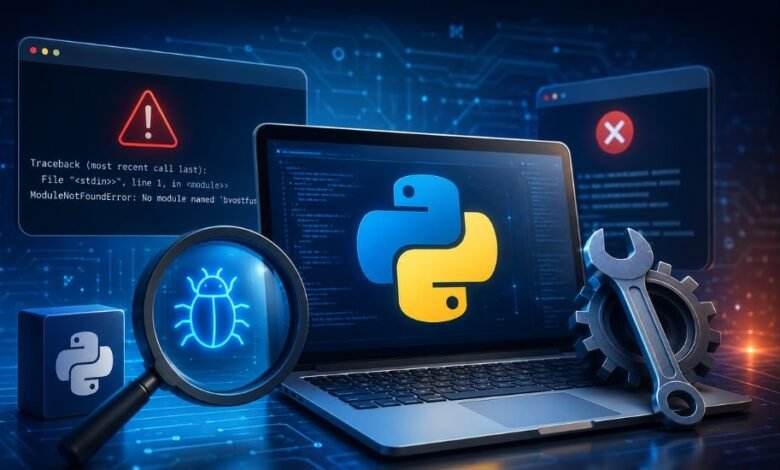
If you encountered the term bvostfus python because of an error message, the best solution is to identify the exact error, module name, Python version, and project dependency rather than assuming that Bvostfus itself is the cause. This approach makes troubleshooting much more precise.
Frequently Asked Questions
What is bvostfus python?
Bvostfus Python is an unclear term that appears in various online technology articles. It is not currently established as an official Python language feature or widely recognized public framework. Some websites describe it as a development environment or experimental concept, but these descriptions are not consistently supported by authoritative documentation.
Is Bvostfus Python an official Python project?
There is no verified evidence that it is an official project of the Python Software Foundation or part of the standard Python distribution. Official Python technologies normally have clear documentation and identifiable sources. Therefore, the name should not be confused with Python itself or its official ecosystem.
Can I install Bvostfus Python?
You should not install software under this name simply because an online article provides a command. First verify the package through a trusted repository, confirm its publisher, inspect its documentation, and make sure you understand what the software does. If those details cannot be verified, it is safer not to proceed.
Why can’t I find Bvostfus Python in normal Python resources?
The most likely explanation is that the name is not associated with a widely published package. It could also be a typo, private project name, experimental concept, or keyword repeated by online content. If you encountered it in existing code, examine the project’s own dependency files and documentation to determine what the name means in that particular context.
Is Bvostfus Python a programming language?
No verified evidence establishes Bvostfus as a separate programming language. Python is the programming language, while frameworks, libraries, and development tools are built around it. Articles may use broad terms such as framework or platform, but those descriptions should be checked against reliable technical evidence.
What should I use instead?
Use established Python tools that match your actual development requirement. For example, choose recognized frameworks for web applications, established libraries for data processing, and standard environment-management tools for dependency isolation. Selecting software with documentation, maintainers, release history, and an active community is generally a much safer approach.
Conclusion
The growing interest in Bvostfus Python shows how quickly unfamiliar technology terms can spread online. However, popularity in search results is not the same as proof that a software project exists or is officially supported. Current public information does not establish Bvostfus Python as a recognized Python framework, standard module, or well-documented public package.
Some online articles associate the term with useful programming ideas such as automation, dependency management, configuration, and project organization. These are all legitimate areas of Python development, but the specific claims attributed to Bvostfus should be treated cautiously unless they can be supported by primary technical sources.
For developers, the best approach is simple: verify before installing. Check reputable package repositories, source code, documentation, maintainers, release history, and community activity before trusting unfamiliar software.
Ultimately, developers do not need an unclear tool name to build effective Python projects. The Python ecosystem already offers mature and well-supported technologies for web development, automation, data science, testing, packaging, and many other tasks. Careful verification helps developers avoid confusion while choosing tools that are reliable, transparent, and appropriate for their projects.