Timberwolves vs Portland Trail Blazers Match Player Stats Complete Game Breakdown Key Performances & Analysis

Introduction
The matchup between the Minnesota Timberwolves and the Portland Trail Blazers is always an exciting battle for basketball fans. Both teams bring unique playing styles, talented players, and competitive energy whenever they meet on the court. Fans and analysts often look closely at timberwolves vs portland trail blazers match player stats to understand how individual performances shape the outcome of the game.
Player statistics reveal much more than just the final score. They highlight scoring leaders, defensive efforts, assists, rebounds, and efficiency ratings that influence the momentum of the game. When reviewing these stats, fans can see which players stepped up under pressure and how team strategies unfolded during each quarter.
The Timberwolves often rely on a balanced roster that combines strong defense with inside scoring, while the Trail Blazers traditionally focus on perimeter shooting and fast-paced offense. These contrasting styles make every matchup unpredictable and entertaining.
In this article, we will take a deep dive into the timberwolves vs portland trail blazers match player stats, analyzing top performers, team strategies, offensive and defensive contributions, and the overall impact of player performances in this thrilling NBA showdown.
Match Overview and Game Highlights
Game Summary and Key Moments
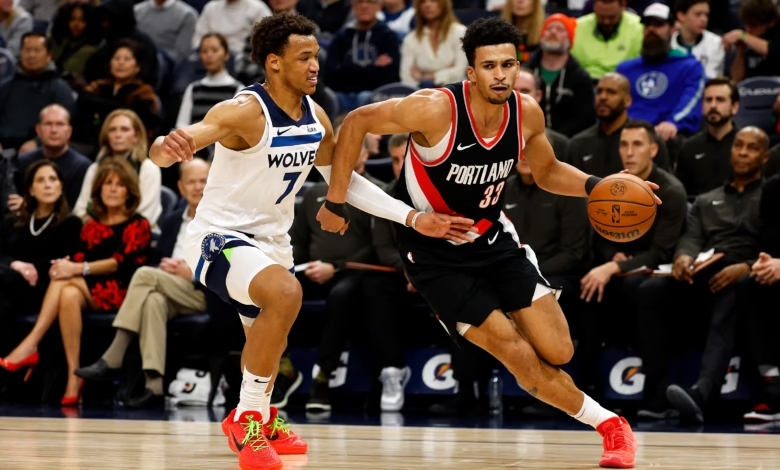
The matchup between the Minnesota Timberwolves and the Portland Trail Blazers often delivers intense competition from the opening tip-off. Both teams try to establish early dominance through aggressive defense and quick scoring opportunities.
During this particular game, the Timberwolves focused on controlling the paint and securing rebounds. Their defensive rotations helped limit Portland’s fast-break opportunities early in the match. Meanwhile, the Trail Blazers relied heavily on perimeter shooting to keep the scoreboard moving.
Several key moments defined the momentum of the game. A strong scoring run in the second quarter helped Minnesota build a lead, but Portland responded with a series of three-point shots to close the gap before halftime.
The final quarter was especially dramatic as both teams traded baskets. Fans analyzing timberwolves vs portland trail blazers match player stats could clearly see how individual performances in the final minutes played a critical role in determining the outcome.
Team Performance Comparison
Team statistics reveal interesting differences between the two sides. Minnesota’s strength often lies in rebounding and interior defense, which gives them second-chance scoring opportunities.
Portland, on the other hand, tends to emphasize ball movement and long-range shooting. Their ability to stretch the defense with three-point attempts creates space for guards to drive toward the basket.
Turnovers also played a crucial role in this matchup. Teams that protect the ball usually maintain control of the tempo and limit easy scoring opportunities for opponents.
Overall, the team performance metrics from the timberwolves vs portland trail blazers match player stats highlight how strategic execution and individual efforts combine to shape the final result.
Timberwolves Key Player Performances
Offensive Leaders
One of the standout performers for Minnesota was Anthony Edwards. His scoring ability and aggressive drives to the basket kept the Trail Blazers’ defense under constant pressure throughout the game.
Edwards displayed impressive shot selection and confidence, finishing with a high scoring total and contributing several key plays in transition. His speed and athleticism allowed him to break through Portland’s defensive line repeatedly.
Another major contributor was Karl-Anthony Towns. Known for his versatile offensive skill set, Towns combined inside scoring with perimeter shooting to stretch the defense.
Towns’ ability to score from multiple positions made him difficult to guard. His offensive presence significantly influenced the timberwolves vs portland trail blazers match player stats, particularly in points and field-goal efficiency.
Defensive Contributions
Defense was another area where Minnesota players made a big impact. Towns contributed several important rebounds and defensive stops that prevented Portland from gaining momentum.
Rudy Gobert played a major role in protecting the rim. His shot-blocking ability forced Portland players to adjust their offensive approach near the basket.
Gobert’s rebounding also helped Minnesota control possession, giving the team additional scoring opportunities on the other end of the court.
These defensive efforts significantly shaped the timberwolves vs portland trail blazers match player stats, proving that strong defense can be just as valuable as scoring.
Portland Trail Blazers Key Player Performances
Top Scorers and Offensive Leaders
For Portland, Anfernee Simons emerged as a key offensive weapon. His quick shooting release and long-range accuracy allowed him to score efficiently from beyond the arc.
Simons’ ability to create his own shot made him a difficult matchup for Minnesota defenders. He consistently found open looks and capitalized on defensive gaps.
Another important contributor was Jerami Grant. Grant’s versatility allowed him to score both inside and outside the paint, adding balance to Portland’s offense.
His ability to drive to the basket and draw fouls also helped the Trail Blazers maintain scoring pressure throughout the game.
Playmaking and Ball Movement
Playmaking is essential for Portland’s offensive system, and several players contributed by distributing the ball effectively.
Guards frequently initiated fast breaks and created scoring opportunities through quick passes and pick-and-roll plays.
These plays allowed Portland to maintain offensive rhythm and keep Minnesota’s defense guessing. Ball movement also opened up perimeter shooting opportunities for the team.
Analyzing the timberwolves vs portland trail blazers match player stats shows that Portland’s offensive success depended heavily on teamwork and effective playmaking.
Head-to-Head Player Comparisons
Star Player Matchups
One of the most exciting aspects of this game was the head-to-head matchup between the star players of both teams.
Anthony Edwards’ explosive scoring contrasted with the Trail Blazers’ perimeter-focused offensive style. His drives to the basket often forced Portland defenders to collapse into the paint.
Meanwhile, Portland’s guards used their speed and shooting ability to stretch Minnesota’s defense and create open opportunities.
These individual battles were clearly reflected in the timberwolves vs portland trail blazers match player stats, highlighting how star players influence the overall flow of the game.
Bench Player Contributions
Bench players also played an important role in maintaining energy and momentum for both teams.
Minnesota’s bench provided valuable defensive support and timely scoring during critical moments of the game.
Portland’s substitutes contributed with quick scoring bursts that helped keep the game competitive.
Depth is often an underrated factor in basketball, and the timberwolves vs portland trail blazers match player stats show that strong bench performance can significantly impact the final result.
Key Statistical Categories That Shaped the Game
Scoring and Shooting Efficiency
Scoring efficiency was one of the most important factors in determining the outcome of the game. Teams that convert a higher percentage of their shots usually gain a significant advantage.
Minnesota focused on high-percentage shots near the basket, while Portland relied more heavily on three-point shooting.
Both strategies had moments of success throughout the match. The contrast in scoring styles made the game dynamic and exciting to watch.
Reviewing the timberwolves vs portland trail blazers match player stats reveals how shooting accuracy played a major role in shaping the scoreboard.
Rebounds, Assists, and Turnovers
Rebounding was another critical element in the game. Minnesota’s strong presence in the paint helped them secure both offensive and defensive rebounds.
Assists also highlighted the importance of teamwork. Portland’s ball movement resulted in several assisted baskets, demonstrating effective offensive coordination.
Turnovers, however, occasionally disrupted both teams’ momentum. Losing possession often led to fast-break opportunities for the opposing side.
These categories are essential for understanding the deeper story behind the timberwolves vs portland trail blazers match player stats.
Tactical Strategies and Coaching Decisions
Timberwolves Game Strategy
Minnesota’s strategy focused heavily on interior defense and rebounding dominance. By controlling the paint, they aimed to limit Portland’s second-chance scoring opportunities.
The Timberwolves also used pick-and-roll plays to create open shots for their primary scorers.
Coaching adjustments during timeouts helped Minnesota maintain defensive intensity and manage player rotations effectively.
These tactical decisions played a significant role in shaping the timberwolves vs portland trail blazers match player stats.
Trail Blazers Game Strategy
Portland’s strategy revolved around speed and perimeter shooting. By spreading the floor, they attempted to create space for guards to attack the basket.
Fast ball movement was another key element of their approach. Quick passes and off-ball movement allowed players to find open shooting opportunities.
Despite facing strong interior defense from Minnesota, Portland’s offensive creativity kept them competitive throughout the game.
Strategic planning and execution were clearly visible when analyzing the timberwolves vs portland trail blazers match player stats.
FAQs
What are the key highlights from the Timberwolves vs Trail Blazers match?
The game featured strong performances from both teams, with standout scoring from star players and intense competition in the final quarter.
Who scored the most points in the game?
Players like Anthony Edwards and Anfernee Simons were among the leading scorers, contributing significantly to their teams’ offensive production.
Why are player stats important in basketball analysis?
Player statistics help analysts understand individual performance, team strategies, and the factors that influence the outcome of a game.
Which team had better defensive performance?
Minnesota’s interior defense and rebounding gave them an advantage in several defensive categories.
How did bench players impact the game?
Bench players provided energy, defensive support, and timely scoring that helped maintain momentum during crucial moments.
Where can fans check detailed NBA match statistics?
Fans can find detailed statistics on official NBA websites, sports analytics platforms, and live game coverage services.
Conclusion
The matchup between the Minnesota Timberwolves and the Portland Trail Blazers showcased the excitement and competitiveness that NBA basketball is known for. Both teams demonstrated impressive skill, strategy, and determination throughout the game.
By analyzing the timberwolves vs portland trail blazers match player stats, fans and analysts can gain deeper insight into how individual performances shape the flow and outcome of a basketball game. Scoring leaders, defensive contributions, and teamwork all play crucial roles in determining success on the court.
Minnesota’s strength in rebounding and interior defense contrasted with Portland’s fast-paced offense and perimeter shooting, creating an engaging battle of strategies. Star players from both teams delivered strong performances that kept the game competitive until the final moments.
Ultimately, examining detailed player statistics allows fans to appreciate the complexities of basketball beyond just the final score. Whether it is scoring efficiency, defensive stops, or playmaking ability, every statistic tells part of the story behind this thrilling Timberwolves vs Trail Blazers matchup.