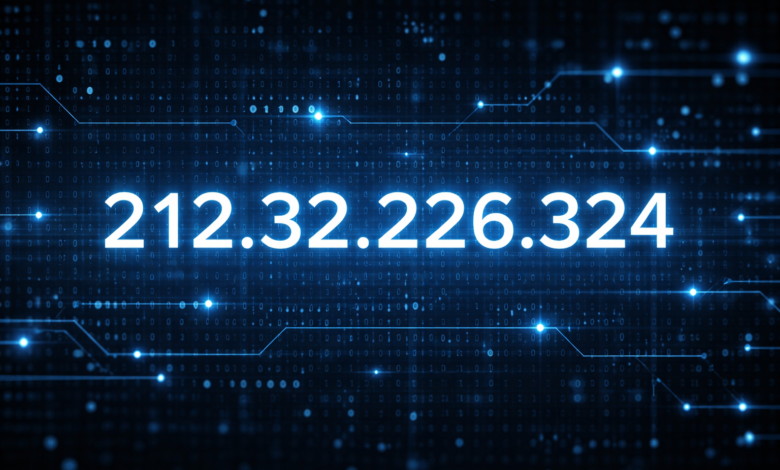
212.32.226.324 Explained Meaning Uses Security Risks & Everything You Need to Know

Introduction
In today’s digital world, every device connected to the internet relies on a unique identifier known as an IP address. One such example is 212.32.226.324, which may appear technical at first but plays an important role in how networks communicate. Whether you are a beginner trying to understand IP addresses or someone who has encountered this specific number in logs or analytics, learning about it can provide valuable insight into internet operations.
An IP address like 212.32.226.324 is part of a broader system that enables computers, servers, and websites to interact efficiently. It acts as a digital address, ensuring that data sent over the internet reaches the correct destination. Without IP addresses, browsing websites, sending emails, or streaming videos would not be possible.
This article will explore the structure, meaning, potential uses, and security implications of IP addresses. You’ll also learn how to analyze and protect yourself when encountering unfamiliar IPs like 212.32.226.324.
Understanding IP Addresses and Their Structure
What Is an IP Address?
An IP address, short for Internet Protocol address, is a unique numerical label assigned to every device connected to a network. It works similarly to a home address, helping data packets find their destination on the internet. Without IP addresses, communication between devices would be chaotic and unreliable.
Every time you access a website, your device uses an IP address to connect with the server hosting that site. This process happens in milliseconds, making the internet feel fast and seamless. IP addresses are essential for routing, identification, and communication.
The example 212.32.226.324 represents what appears to be an IPv4 address. IPv4 addresses are composed of four sets of numbers separated by dots. Each set typically ranges from 0 to 255, forming a 32-bit numeric format.
IPv4 vs IPv6 Explained
There are two main types of IP addresses: IPv4 and IPv6. IPv4 is the older and more widely used format, consisting of four numerical blocks. However, due to the growing number of devices worldwide, IPv4 addresses are becoming limited.
IPv6 was introduced to solve this problem. It uses a longer alphanumeric format, allowing for a significantly larger number of unique addresses. While IPv6 adoption is increasing, IPv4 addresses are still commonly used in many systems.
Understanding the difference helps users identify whether an address is valid. For instance, in a typical IPv4 structure, numbers should not exceed 255, which raises questions about addresses like 212.32.226.324.
How IP Addresses Are Assigned
IP addresses are assigned by Internet Service Providers (ISPs) or network administrators. These addresses can be either static or dynamic. Static IP addresses remain constant, while dynamic IPs change periodically.
Organizations often use static IPs for servers and websites to ensure consistent access. On the other hand, home users usually receive dynamic IP addresses to improve efficiency and security.
Knowing how IP addresses are assigned helps in understanding why you might encounter different IPs while browsing or managing networks.
Analyzing the Validity of 212.32.226.324
Is This IP Address Valid?
At first glance, 212.32.226.324 looks like a standard IPv4 address. However, there is a critical issue. In IPv4 formatting, each segment must be between 0 and 255. The number “324” exceeds this limit, making the address technically invalid.
This means that 212.32.226.324 cannot function as a real IPv4 address in standard networking environments. It may appear in logs or data due to errors, misconfigurations, or intentional masking.
Understanding validity is important because it helps prevent confusion when analyzing network data or troubleshooting connectivity issues.
Common Reasons for Invalid IPs
There are several reasons why an invalid IP address like this might appear. One common cause is a typographical error, where a number is entered incorrectly. Even a small mistake can result in an invalid address.
Another reason could be data corruption or formatting issues in logs or databases. Sometimes, systems may store incorrect values due to bugs or misconfigurations.
Additionally, invalid IPs can be used intentionally in testing environments or as placeholders. Developers often use such addresses to simulate scenarios without affecting real systems.
How to Verify an IP Address
To verify whether an IP address is valid, you can use online IP lookup tools or networking software. These tools check the structure and existence of the address.
You can also manually validate the format by ensuring each segment falls within the acceptable range. For IPv4, this means checking that all numbers are between 0 and 255.
Verification is a simple yet effective way to avoid errors and ensure accurate network analysis.
Possible Uses of IP Addresses in General
Website Hosting and Servers
IP addresses are essential for hosting websites and managing servers. When you type a domain name into your browser, it is translated into an IP address through the Domain Name System (DNS).
This process allows your device to locate the server hosting the website. Without IP addresses, accessing websites would require remembering complex numerical sequences instead of simple domain names.
Businesses rely heavily on IP addresses to maintain online presence and ensure their services are accessible worldwide.
Tracking and Analytics
IP addresses are often used in analytics to track user behavior and location. Websites collect IP data to understand where visitors are coming from and how they interact with content.
This information helps businesses improve their services, target specific audiences, and enhance user experience. However, it also raises privacy concerns, as IP addresses can reveal approximate geographic locations.
Understanding how IPs are used in tracking can help users make informed decisions about their online privacy.
Network Security and Monitoring
In cybersecurity, IP addresses play a crucial role in monitoring and protecting networks. Security systems analyze incoming and outgoing IP traffic to detect suspicious activities.
For example, repeated login attempts from a specific IP may indicate a potential attack. Network administrators can block or restrict such IPs to prevent unauthorized access.
Proper monitoring ensures the safety and integrity of digital systems.
Security Risks Associated with Unknown IPs
Potential Threats from Suspicious IPs
Unknown or suspicious IP addresses can pose various security risks. They may be linked to malicious activities such as hacking attempts, spam, or phishing attacks.
While 212.32.226.324 itself is invalid, encountering unusual IPs should still prompt caution. Cybercriminals often disguise their activities using random or misleading IP formats.
Being aware of potential threats helps users take preventive measures and avoid security breaches.
How Hackers Use IP Addresses
Hackers can use IP addresses to scan networks, identify vulnerabilities, and attempt unauthorized access. They may also use IP spoofing techniques to hide their identity.
By manipulating IP addresses, attackers can bypass security systems and carry out malicious activities without being easily traced.
Understanding these tactics is essential for strengthening network defenses.
Steps to Protect Yourself
To stay safe, users should implement basic security practices. These include using firewalls, antivirus software, and strong passwords.
Regularly updating software and monitoring network activity can also help detect and prevent threats. Avoid interacting with unknown or suspicious IPs whenever possible.
Taking these precautions can significantly reduce the risk of cyberattacks.
How to Investigate an IP Address Safely
Using Online Lookup Tools
There are many online tools available that allow users to investigate IP addresses. These tools provide information such as location, ISP, and usage type.
While 212.32.226.324 may not return valid results, using lookup tools can still help identify patterns or errors in data.
These tools are easy to use and require minimal technical knowledge.
Checking Logs and Network Data
If you encounter an IP address in logs, it’s important to analyze the context. Look at timestamps, activity patterns, and associated events to understand its significance.
Logs can provide valuable insights into network behavior and help identify potential issues.
Proper log analysis is a key skill in network management and cybersecurity.
Avoiding Risky Actions
When investigating IP addresses, avoid taking risky actions such as directly interacting with unknown servers. This could expose your system to potential threats.
Instead, rely on trusted tools and methods to gather information safely. Always prioritize security when dealing with unfamiliar IPs.
FAQs About IP Addresses and 212.32.226.324
1. What is 212.32.226.324 used for?
This appears to be an invalid IPv4 address due to the number exceeding the allowed range. It may be used as a placeholder or result from an error.
2. Can an IP address contain numbers above 255?
No, in IPv4 format, each segment must be between 0 and 255. Any number above this range makes the address invalid.
3. How can I check if an IP address is real?
You can use IP lookup tools or manually verify the format to ensure each segment falls within the valid range.
4. Is it dangerous to see unknown IP addresses?
Not always, but unknown IPs should be treated with caution. Some may be harmless, while others could indicate suspicious activity.
5. Why do invalid IP addresses appear in logs?
They can appear due to errors, misconfigurations, or testing scenarios. Sometimes they are also used intentionally as placeholders.
6. What should I do if I encounter a suspicious IP?
Avoid interacting with it directly. Use security tools to analyze it and take necessary precautions to protect your system.
Conclusion
Understanding IP addresses is essential in today’s digital environment. While 212.32.226.324 may look like a typical IP address, its invalid structure highlights the importance of knowing how IP formats work. Recognizing such details can help prevent confusion and improve your ability to analyze network data.
Throughout this article, we explored the basics of IP addresses, their structure, and their role in internet communication. We also discussed how to identify invalid IPs, the risks associated with unknown addresses, and the best practices for staying secure online.
By applying this knowledge, you can confidently التعامل with IP-related issues, enhance your cybersecurity awareness, and make informed decisions when navigating the digital world.