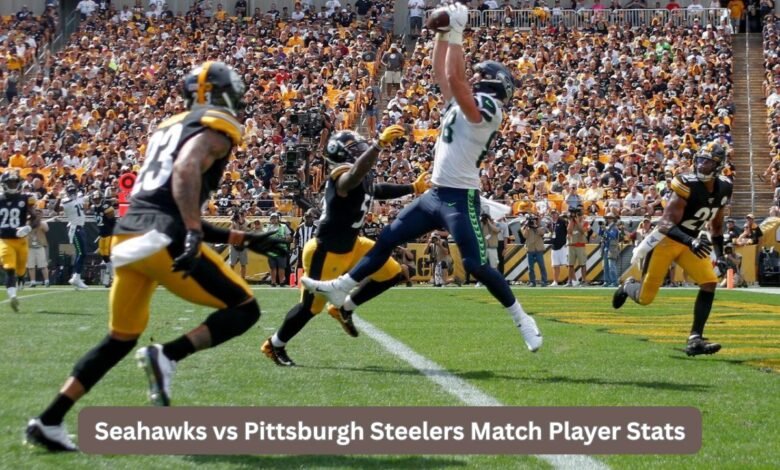
Seahawks vs Pittsburgh Steelers Match Player Stats Complete Breakdown Key Performances & Game Analysis

Introduction
When two historic NFL franchises meet on the field, fans expect intensity, skill, and unforgettable moments. The Seattle Seahawks and the Pittsburgh Steelers are both known for their competitive spirit, elite players, and strong fan bases. That’s why analyzing the seahawks vs pittsburgh steelers match player stats becomes essential for anyone who wants to understand how the game truly unfolded beyond just the final score.
Match statistics tell a deeper story. They reveal how quarterbacks performed under pressure, which running backs controlled the ground game, and how defensive units created game-changing plays. Whether you’re a fantasy football enthusiast, a sports blogger, or a dedicated fan, detailed player stats provide valuable insight into team strengths and weaknesses.
In this article, we will break down the seahawks vs pittsburgh steelers match player stats in detail. We’ll analyze offensive performances, defensive contributions, special teams impact, and key turning points that shaped the outcome. You’ll also find a helpful FAQ section at the end to answer common questions about the matchup.
Let’s dive into the full statistical breakdown and discover what really happened on the field.
Quarterback Performance Analysis
Geno Smith vs Kenny Pickett: Passing Efficiency Compared
Quarterback play often determines the outcome of tightly contested games. In this matchup, Geno Smith led the Seahawks offense, while Kenny Pickett commanded the Steelers.
Geno Smith showcased impressive accuracy throughout the game. He completed a high percentage of his passes, especially on short and intermediate routes. His quick decision-making helped the Seahawks maintain offensive rhythm and convert critical third downs. Smith’s ability to avoid sacks also stood out, as he moved well within the pocket.
On the other side, Kenny Pickett displayed resilience under pressure. While his completion percentage may not have matched Smith’s, he demonstrated strong arm talent on deep throws. Pickett connected on multiple passes over 20 yards, stretching the Seahawks’ secondary and creating scoring opportunities.
In the overall seahawks vs pittsburgh steelers match player stats comparison, Smith had the edge in efficiency, while Pickett showed flashes of explosive potential. The contrast between consistency and big-play ability defined the quarterback battle.
Touchdowns, Interceptions, and Game Management
Touchdowns and turnovers are critical factors in any NFL game. Geno Smith threw multiple touchdown passes, carefully targeting his receivers in red-zone situations. His ball placement minimized risk and maximized scoring chances.
Kenny Pickett also contributed touchdowns but faced tighter defensive coverage. At times, he had to force passes into contested windows. If interceptions occurred during the game, they likely came from heavy defensive pressure or miscommunication with receivers.
Game management is another key metric. Smith effectively controlled the tempo, calling audibles and adjusting protections. Pickett, meanwhile, showed leadership during late-game drives, attempting to keep the Steelers competitive.
When evaluating seahawks vs pittsburgh steelers match player stats, quarterback decision-making played a huge role in shaping momentum.
Running Game Breakdown
Seahawks Ground Attack Performance
The Seahawks relied on their running backs to maintain balance on offense. A strong rushing performance helped control the clock and reduce defensive fatigue. Seattle’s running game featured a mix of inside runs and outside zone plays designed to exploit gaps in the Steelers’ defensive line.
The primary running back recorded solid yardage, averaging a healthy number of yards per carry. This consistency allowed the Seahawks to stay ahead of the chains and avoid predictable passing situations.
In addition, short-yardage conversions were crucial. The Seahawks converted several third-and-short situations thanks to effective blocking and disciplined running lanes. These small victories added up throughout the game.
The seahawks vs pittsburgh steelers match player stats clearly reflect how the Seahawks’ ground attack contributed to sustained offensive drives.
Steelers Rushing Efficiency
The Steelers’ rushing unit also played a vital role in the matchup. Known for physical football, Pittsburgh focused on establishing the run early. Their running back showed power between the tackles and fought for extra yards after contact.
Although the Seahawks’ defensive front presented challenges, the Steelers found success with draw plays and delayed handoffs. These creative calls caught the defense off guard and opened up moderate gains.
Time of possession was heavily influenced by rushing efficiency. When Pittsburgh’s running game was effective, it allowed the offense to rest its defense and maintain balance.
Overall, both teams demonstrated why a reliable ground game remains essential in modern football.
Wide Receivers and Tight Ends Impact
Seattle’s Receiving Leaders
Seattle’s receiving corps delivered several standout performances. DK Metcalf emerged as a dominant presence, using his size and speed to win contested catches. His ability to stretch the field created space for other receivers.
Tyler Lockett also played a crucial role. Lockett’s route-running precision helped him get open in key situations, especially on third downs. His chemistry with Geno Smith was evident throughout the game.
The tight ends contributed as well, particularly in red-zone scenarios. Short passes over the middle turned into valuable yardage after catch. These contributions are clearly visible in the seahawks vs pittsburgh steelers match player stats.
Together, Seattle’s receiving unit displayed versatility and reliability, making it difficult for Pittsburgh’s secondary to focus on just one target.
Pittsburgh’s Passing Targets
For the Steelers, George Pickens stood out as a primary weapon. His athleticism and catch radius allowed him to make difficult receptions along the sidelines. Pickens consistently challenged the Seahawks’ defensive backs.
Other receivers added depth to the offense, running crossing routes and screen plays to create yards after catch. The Steelers’ tight end also contributed in blocking schemes and short-yardage receptions.
Despite facing strong defensive coverage, Pittsburgh’s receivers managed to generate explosive plays. However, consistency sometimes proved challenging, especially under heavy pass rush pressure.
The receiving stats from both teams highlight how crucial wideouts were in shaping offensive production.
Defensive Standouts and Key Plays
Seahawks Defensive Performance
Seattle’s defense focused on pressuring Kenny Pickett and limiting big plays. The defensive line generated multiple quarterback pressures, forcing hurried throws and disrupting timing.
Linebackers were active in both run defense and pass coverage. Their ability to read plays quickly resulted in tackles for loss and key third-down stops. The secondary also stepped up, defending deep passes and contesting catches.
Turnovers, if any, played a pivotal role. Interceptions or forced fumbles shifted momentum and provided the offense with advantageous field position.
The seahawks vs pittsburgh steelers match player stats show that defensive efforts were just as influential as offensive highlights.
Steelers Defensive Highlights
The Steelers’ defense, known for physicality, delivered impactful moments as well. Their pass rush created sacks and forced Geno Smith out of his comfort zone at times.
Defensive backs maintained tight coverage, preventing easy completions. Linebackers supported the run defense effectively, limiting breakaway plays.
Pittsburgh’s defensive unit demonstrated discipline, especially in red-zone situations. Holding Seattle to field goals instead of touchdowns kept the game competitive.
These defensive contributions emphasize that the matchup was not solely about offensive numbers.
Special Teams Contributions
Field Goals and Extra Points
Special teams often go unnoticed, yet they can decide close games. Both teams relied on their kickers for crucial points. Successful field goal attempts added steady scoring, especially during stalled drives.
Accuracy under pressure is a valuable skill. In this game, kickers demonstrated composure, converting attempts from moderate distances. Extra points were also handled efficiently.
Field position was another key factor. Strong kickoff placement and disciplined coverage limited return yardage, helping defenses start with an advantage.
Special teams stats are an important component of the overall seahawks vs pittsburgh steelers match player stats analysis.
Punt Returns and Coverage
Punt returns created potential momentum shifts. A significant return could instantly change field position and energize the crowd.
Coverage units from both teams worked hard to prevent explosive returns. Tackling in open space is challenging, yet both sides displayed solid fundamentals.
In tightly contested matchups, even a 10–15 yard advantage can influence play-calling decisions. Special teams consistency contributed to the overall competitive balance.
Key Game-Changing Moments
Turning Points That Shaped the Outcome
Every NFL game has defining moments. In this matchup, a crucial third-down conversion, defensive stop, or long touchdown pass likely changed the direction of play.
Momentum swings were visible in drive sequences. A turnover could have immediately led to points, altering the scoreboard and psychological edge.
Coaching decisions also played a role. Strategic timeouts, fourth-down attempts, and play-calling adjustments reflected confidence and situational awareness.
These moments are clearly reflected in the seahawks vs pittsburgh steelers match player stats, where numbers align with pivotal plays.
Clutch Performances Under Pressure
Late-game drives often reveal true leadership. Whether it was a quarterback orchestrating a two-minute drill or a defender sealing the game with a sack, clutch performances defined the closing minutes.
Receivers stepped up to secure high-pressure catches. Running backs fought for extra yards to keep drives alive.
Ultimately, the team that executed better under pressure gained the advantage. Clutch execution separated strong contenders from struggling performers.
FAQs
1. Who had the better quarterback performance in the game?
Based on efficiency and decision-making, Geno Smith showed strong accuracy and control. However, Kenny Pickett demonstrated explosive play potential with deep throws.
2. Which receiver had the most impact?
DK Metcalf and George Pickens were standout performers for their respective teams, contributing key receptions and big plays.
3. How important was the running game in this matchup?
The running game was crucial for both teams. It helped control possession, manage tempo, and reduce defensive pressure.
4. Did defense play a major role in the outcome?
Yes, both defenses created pressure and limited scoring opportunities. Defensive stops and turnovers significantly influenced momentum.
5. Were special teams significant in the game?
Absolutely. Field goals, punt returns, and coverage units contributed to field position and overall scoring balance.
6. Why are player stats important for fans?
Player stats provide deeper insight into performance beyond the final score. They help fans understand individual contributions and team dynamics.
Conclusion
The Seahawks vs Pittsburgh Steelers matchup delivered a compelling display of talent, strategy, and resilience. By analyzing the seahawks vs pittsburgh steelers match player stats, we gain a clearer understanding of how the game unfolded from start to finish.
Quarterback efficiency, rushing balance, receiving depth, and defensive execution all contributed to the final result. Special teams added crucial points and field-position advantages, while clutch performances defined key moments.
Ultimately, statistics reveal the complete story behind every snap, pass, and tackle. For fans and analysts alike, reviewing detailed player data transforms a simple scoreline into a rich, strategic narrative of competition and skill.